THREE:Or to take a stronger case. A deserter from the ranks escapes to his home, breaks into it at night, robs an infirm father of all the savings he has provided for his old age, and in a struggle for their possession so injures him that he dies. Must the law disclaim all indignation, all resentment, in the punishment it inflicts, and say to such a ruffian that it only deals hard with him in order to warn others by his example, and with the pious hope of making a good man of him in the future? If resentment is ever just, is it wrong to give it public expression? If it is natural and right in private life, why should it be a matter of shame in public life? If there is such a thing as just anger for a single man, does it become unjust when distributed among a million?Ramsay argues that the penal laws of a particular country can only be considered with reference to the needs of a particular country, and not in the abstract; that the government of a country will always enforce laws with a view to its own security; and that nothing less than a general revolution will ever make the holders of political power listen for a moment to the claims of philosophers.
FORE: From this necessity of the favour of other people arose private duels, which sprang up precisely in an anarchical state of the laws. It is said they were unknown to antiquity, perhaps because the ancients did not meet suspiciously armed in the temples, the theatres, or with friends; perhaps because the duel was an ordinary and common sight, presented to the people by gladiators, who were slaves or low people, and freemen disdained to be thought and called private gladiators. In vain has it been sought to extirpate the custom by edicts of death against any man accepting a challenge, for it is founded on that which some men fear more than death; since without the favour of his fellows the man of honour foresees himself exposed either to become a merely solitary being, a condition insufferable to a sociable man, or to become the butt of insults and disgrace which, from their constant operation, prevail over the fear of punishment. Why is it that the lower orders do not for the most part fight duels like the great? Not only because they are disarmed, but because the need of the favour of others is less general among the people[213] than among those who, in higher ranks, regard themselves with greater suspicion and jealousy.
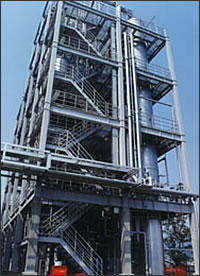
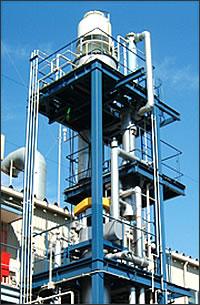
Methanol refinement systems, amyl alcohol refinement systems, ethanol refinement systems, hexanol distillation systems, propanol refinement systems, cyclohexanol distillation systems, isopropanol dehydration systems, ethylene glycol recovery systems, and butanol distillation systems.
FORE:
Hexane distillation systems, tall oil distillation systems, benzene distillation systems, lubricating oil refinement systems, xylene-free distillation systems, low-boiling gas distillation systems, ethylbenzene recovery systems, fusel oil distillation systems, naphthalene distillation systems, propylene recovery systems, and turpentine oil distillation systems.
FORE:The most successful adoption of Beccaria¡¯s principles of punishment occurred in Tuscany, under the Grand Duke Leopold. When he ascended the ducal throne, the Tuscans were the most abandoned people of all Italy. Robberies and murders were none the less frequent for all the gallows, wheels, and tortures which were employed to repress them. But Leopold in 1786 resolved to try Beccaria¡¯s plan, for which purpose he published a code, proportioning punishments to crimes, abolishing mutilation and torture, reducing the number of acts of treason, lessening confiscations, destroying the right of asylum, and above all abolishing capital punishment even for murder. The result was, says a contemporary, that Tuscany, from having been the land of the greatest crimes and villanies, became ¡®the best ordered State of Europe.¡¯[22] During twenty years only five murders were committed in Tuscany, whilst at Rome, where death continued to be inflicted with great pomp, as[36] many as sixty were committed within the space of three months.[23]
Ether distillation systems, camphor distillation systems, epichlorohydrin distillation systems, aniline distillation systems, dioxane refinement systems, acetonitrile distillation systems, furfural refinement systems, formalin distillation systems, cyclohexane distillation systems, monoethanolamine rectification systems, polyglycol ether distillation systems, dimethylformamide recovery systems, acrylic glycol ether distillation systems, acrylonitrile refinement systems, acetone recovery systems, pyridine distillation systems, methyl ethyl ketone recovery systems, picoline distillation systems, methyl isobutyl ketone recovery systems, and acetaldehyde recovery systems.